Essential Motorcycle Gear: What You Actually Need
When you’re getting into motorcycling — or upgrading your kit — the sheer amount of gear on the market can be overwhelming. Everyone’s got an opinion, and some of it is driven more by brand loyalty than actual experience. Here’s my honest take on what you need, what’s worth spending on, and where you can save a few quid without compromising safety.
Helmets
Your helmet is the single most important piece of gear you’ll buy. It’s also a legal requirement, so this isn’t optional. Every helmet sold in the UK must carry either a BS 6658 kitemark, an ECE 22.06 mark, or both. Don’t buy a helmet without one.
Full-face helmets offer the best protection. They cover your entire head and face, and in a crash, your chin is one of the most common impact points. If you’re doing any kind of serious riding — commuting, touring, or anything above town speeds — a full-face is what I’d recommend.
Modular (flip-up) helmets are popular with tourers and commuters because you can flip the chin bar up without taking the whole helmet off. They’re heavier than full-face helmets and sometimes noisier, but the convenience is genuine. Just make sure it’s a decent brand — cheap flip-ups can feel flimsy.
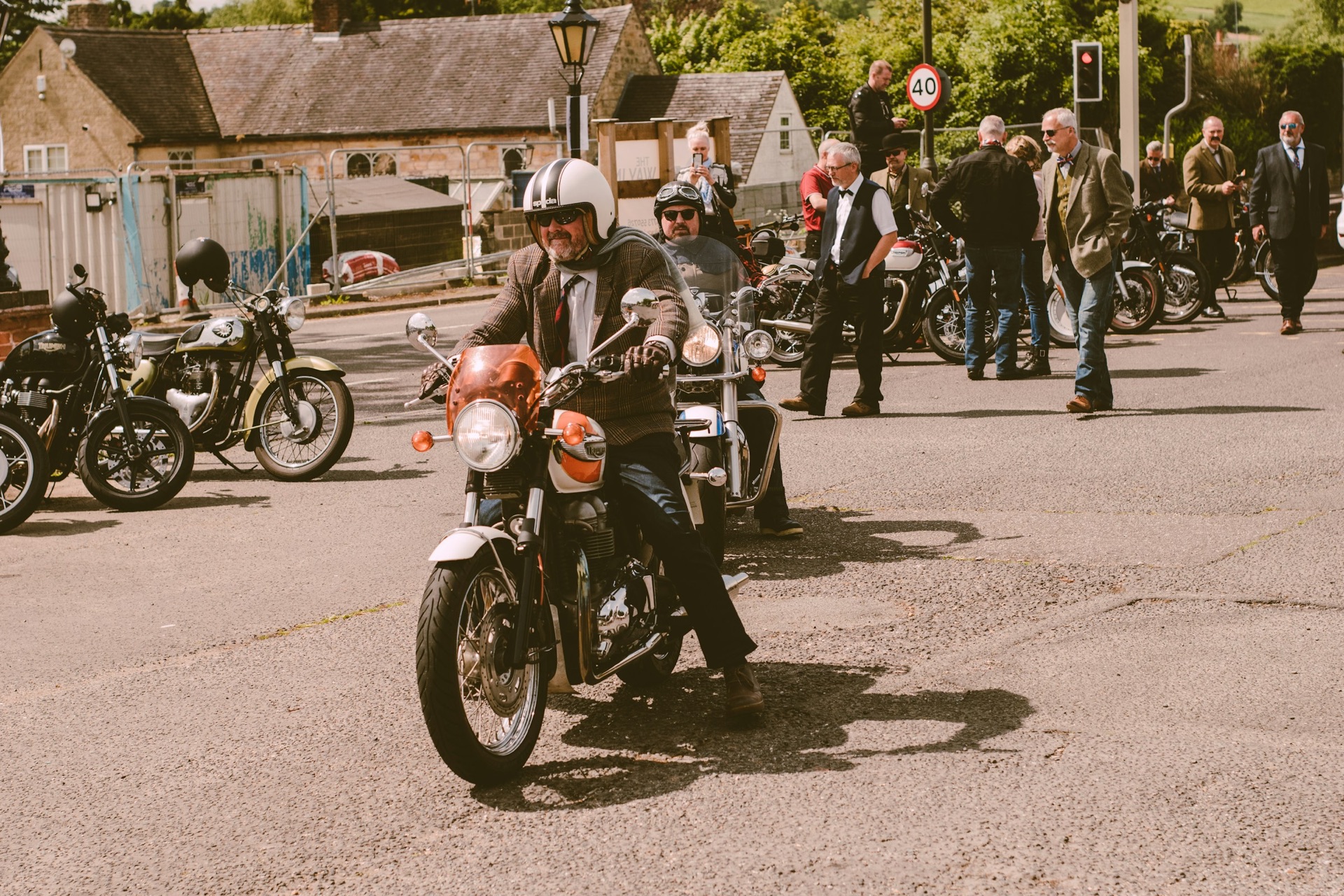
Open-face helmets look the part on a classic or a cruiser, but they leave your face completely exposed. Fine for gentle Sunday rides, but if you come off at any speed, your chin and face have zero protection. Know the trade-off.
Budget tip: You don’t need to spend a fortune. A Shoei or Arai will last and feel premium, but brands like HJC, Scorpion, and Caberg make excellent helmets at half the price. Fit matters more than brand — go to a shop and try several on. A cheaper helmet that fits your head shape perfectly is better than an expensive one that doesn’t.
Jackets and Trousers
Leather is still the gold standard for abrasion resistance. A good leather jacket will slide on tarmac far longer than textile before wearing through. It’s the go-to for sportier riding and warmer weather. The downside is that leather isn’t waterproof, it’s heavier, and it needs looking after with cream or conditioner.
Textile jackets are more versatile. Most come with waterproof liners, removable thermal layers, and ventilation zips, making them usable year-round. Modern textiles like Cordura are genuinely tough, and for everyday commuting and touring, a good textile jacket is hard to beat.
Look for jackets with CE-rated armour in the shoulders, elbows, and ideally a back protector (many jackets only include a foam insert for the back — upgrade to a proper CE Level 2 back protector if you can). The same goes for trousers — knee and hip armour should be CE rated, not just foam padding.
Budget tip: RST, Oxford, and Richa offer genuinely protective gear at reasonable prices. You don’t need to spend four figures to be well-protected.
Gloves
Your hands are the first thing you put out when you fall, so good gloves are essential. Look for:
- Hard knuckle protection — a knuckle protector makes a real difference in a slide
- Palm sliders — some gloves have palm sliders to help your hand slide rather than catch on the tarmac
- Good fit — you need to feel the controls properly, so don’t go too bulky
Summer gloves with perforated leather are great for warm weather but offer less padding. Winter gloves keep your hands warm but can feel like boxing gloves on the controls. Most riders end up with at least two pairs — one for summer, one for winter.
Budget tip: Oxford and RST make solid gloves from around thirty to fifty quid. You don’t need racing gloves for a commute, but you do need something with proper protection.
Boots
Trainers on a motorcycle are a terrible idea. Your ankles and feet are incredibly vulnerable in a crash, and even a low-speed tip-over can crush a foot under the bike.
Proper motorcycle boots should have:
- Ankle protection — reinforced ankle cups or armour
- A stiff sole — to protect against crush injuries and give good feel on the controls
- Oil-resistant grip — so your foot doesn’t slip off the peg or the ground at traffic lights
You don’t need full-on race boots for road riding. There are plenty of casual-looking motorcycle boots that offer genuine protection without looking like you’ve just come off a track day. Brands like TCX, Forma, and RST make boots that look normal but have the armour where it matters.
Other Useful Kit
A few extras that are worth considering:
- Ear plugs — wind noise above 50mph causes real hearing damage over time. A set of moulded ear plugs costs about fifteen quid and makes a massive difference
- Neck tube or balaclava — keeps the cold out and stops your helmet lining getting grotty
- Heated grips or heated gloves — if you ride through winter, these are a game-changer. Cold hands are distracted hands
- Hi-vis vest or reflective patches — you don’t have to look like a crossing guard, but being visible saves lives. A reflective backpack cover or jacket panel is a good compromise
Where to Buy
I’d always recommend trying gear on in a shop before you buy. Helmets especially need to fit your head shape, and sizes vary between brands. Local shops like J&S Accessories in Southampton are worth a visit — the staff know their stuff and can help you find the right fit.
Online retailers like SportsBikeShop, FC Moto, and Mega Motorcycle Store often have competitive prices, and the returns process is usually straightforward if something doesn’t fit.
If you’ve just bought a bike and you’re sorting out your gear, feel free to get in touch — I’m always happy to point you in the right direction. Ride safe.